PHOTOMETRY / PHOTOLUX
Photolux: measurement of illuminance
A sensor and a photometric acquisition chain for measuring illuminance in all areas of activity, in the laboratory and in industrial control.
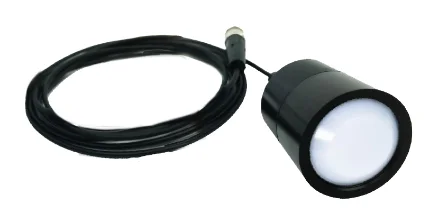
Integrate measurement into your application.
- Measurement of illuminance with a photodiode and dedicated conditioning electronics.
- Acquisition and transmission of measurements to the control computer according to the chosen architecture.
- Integration with a bench or measurement software.
- Development interfaces available depending on the proposed configuration.
Define the measurement chain.
The useful range, geometry, light environment and the requirements of your application guide the choice of sensor and acquisition settings.
Calibration and monitoring of measurements →A COMMON PLATFORM
Control your equipment with ALPES.
Preparation of products and tests, control of power supplies for tested products, axes, photometers, colorimeters and alignment lasers. Synchronize operations, create your maps and analyze the results according to the configured criteria.
Discover ALPES →A photometric acquisition chain for illuminance measurement
Photolux combines optical detection, signal conditioning and illuminance acquisition. It can be integrated into laboratory test equipment or production control, including automotive lighting, street lighting and luminaire manufacturing applications.
| Detection | Photodiode with spectral correction to the photopic V(λ) sensitivity function. |
|---|---|
| Conditioning | CECA electronics amplify the photocurrent and convert it to voltage. |
| Acquisition | National Instruments module and digital Ethernet transmission. |
| Software | LabVIEW-based control; integration selected for your bench. |
| Development | SDK available in C, C++ and LabVIEW for your own application. |
Illuminance or luminous intensity: what does your test require?
Specify the quantity and units required by your protocol, such as lux for illuminance or candelas for luminous intensity. Measurement distance and geometry must be defined alongside the acquisition chain to interpret the expected results.
A question about our products?
Need information, documentation or technical assistance? Simply email us, even if your requirements are still taking shape.